
Data Centers: The New Gold Rush
The International Energy Agency estimates electricity demand from data centers could more than double by 2030, driven largely by artificial intelligence.
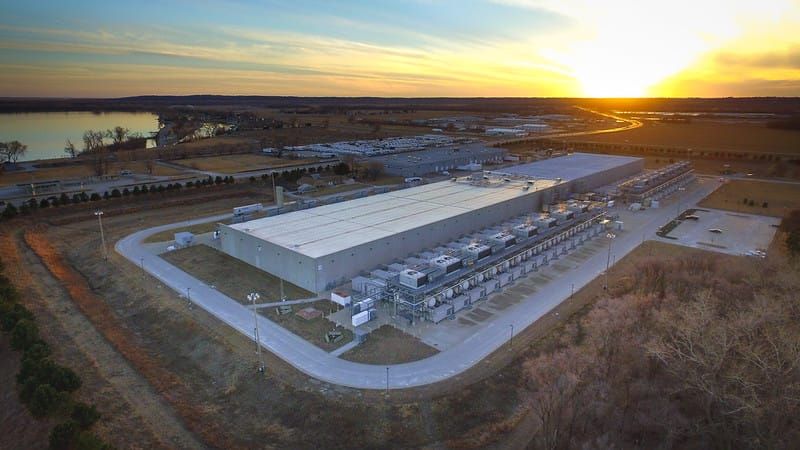
In Appalachia, the rich urban folks first came to the mountains looking for timber. A few decades later they came after coal, then natural gas, and somewhere along the way they discovered there was money to be made in just about everything except paying local people what it was worth. Every generation seems to have its own gold rush, and every gold rush begins the same way. Somebody from the city travels down a country road, admires your property, tells you how lucky you are, and offers to buy a piece of it.
This time, though, they're not after what's under your land. They're after something running across it.
Electricity.
That may sound odd until you realize electricity has quietly become one of the most valuable resources in America. If you've noticed billion-dollar technology companies suddenly showing an interest in rural counties, it's not because they've developed a fondness for fresh air, cows, and Dollar General stores. They're looking for land with dependable power, plenty of room to build, access to plenty of water, and fiber optic lines. A lot of rural America checks every one of those boxes.
Most folks assume this all started with artificial intelligence, but that's only part of the story. AI didn't create the demand. It simply kicked the barn door off the hinges.
Back in the 1990s, companies needed places to store websites and email. Then came online banking, streaming television, smartphones, cloud computing, social media, and every other service we've grown so accustomed to that we hardly notice them anymore. Every family picture you back up, every movie you stream, every online purchase, every medical record, and every GPS direction has to live somewhere.
The cloud always sounded mysterious to me, like our family photographs were floating around somewhere over Powell Mountain with the buzzards. Truth is, the cloud is just somebody else's computer. Usually thousands of them, sitting inside enormous buildings that look more like windowless warehouses than anything you'd call high-tech.
Then along came ChatGPT, and suddenly those computers weren't just storing information anymore. They were writing essays, designing logos, answering questions, generating videos, translating languages, and helping doctors read medical scans. It turns out teaching a computer to think takes a whole lot more electricity than teaching it just to remember.
That's why companies like Amazon, Microsoft, Google, Meta, and others have begun spending hundreds of billions of dollars building new data centers. They're not chasing scenery. They're chasing POWER. The International Energy Agency estimates electricity demand from data centers could more than double by 2030, driven largely by artificial intelligence. Here in the United States, they're expected to account for nearly half of the nation's growth in electricity demand over the next several years.
Read that sentence again.
The International Energy Agency estimates electricity demand from data centers could more than double by 2030, driven largely by artificial intelligence.
That's a remarkable shift in the American economy, and it's happening so fast that many local governments are still trying to figure out exactly what they're being asked to approve.
To county supervisors, the sales pitch can sound mighty attractive. New tax revenue. Hundreds of construction jobs. Infrastructure improvements. Economic development. After decades of watching businesses close and young people leave town, who wouldn't want to hear that?
Country people, however, have earned the right to ask a few questions before signing on the dotted line.
How much electricity will one of these places actually use? Where will that power come from? How much will consumer electric bills increase? Will new transmission lines have to cross farms and forests? How much water will be needed to keep thousands of computer servers cool? Environmental impact of their waste water? And after the ribbon-cutting crowd heads home and the television cameras pack up, how many permanent jobs will still be there? Is this data center deal a net gain for a community or just more corporate welfare? We’ve seen this before with so-called economic development…
Those aren't anti-business questions. They're taxpayer questions.
We've heard big promises before. Big AG promised to keep farmers, farming. Coal built fortunes, but not always for the people digging it. Railroads changed America while plenty of mountain communities watched the trains haul wealth out of the valley. Textile mills came and went. Call centers promised a new economy until somebody found cheaper labor somewhere else. Rural America has welcomed every one of those industries with open arms because that's what rural America does. We work hard, give folks a fair shake, and hope they'll treat us the same way.
Sometimes they do. Sometimes they don't.
That doesn't mean data centers are always a bad deal. They may prove to be one of the best economic opportunities rural communities have seen in decades. The Department of Energy expects electricity demand from data centers to keep climbing as artificial intelligence expands into nearly every corner of American life, from manufacturing and agriculture to healthcare and education.
History, though, suggests one simple rule. Before you sell the back forty, walk the fence one more time.
For the first time in American history, electricity itself has become the resource everybody wants. Agriculture, timber and coal built the last century in rural America. Electricity and data may very well build this one. The question isn't whether rural America will play a part in that future. Like it or not, we already are.
The real question is whether we'll finally learn what our resources are worth before we sell them off to corporate America at a huge discount.
Do Your Own Research
• International Energy Agency – Energy and AI:https://www.iea.org/reports/energy-and-ai
• U.S. Department of Energy – Evaluating the Increase in Electricity Demand from Data Centers: https://www.energy.gov/articles/doe-releases-new-report-evaluating-increase-electricity-demand-data-centers
• U.S. Department of Energy – Clean Energy Resources to Meet Data Center Electricity Demand: https://www.energy.gov/oe/clean-energy-resources-meet-data-center-electricity-demand
• Cloudflare Learning Center – What Is a Data Center?: https://www.cloudflare.com/learning/cdn/glossary/data-center/
• Forbes – What Is a Data Center?
https://www.forbes.com/sites/technology/article/what-is-a-data-center/

Comments ()